
Dental Implants in Peru: Types, Process, and Costs in 2026
Losing a tooth is not just a cosmetic issue. Over time, it can affect your bite, accelerate wear on other teeth, cause bone loss, and complicate future treatment. That is why, for many patients (international visitors coming for dental tourism in Peru as well as Peruvians looking for a dental clinic in Lima near Miraflores or San Isidro), the most stable and “natural” solution is usually the same: dental implants.
In this 2026 guide, you will find a complete, clear breakdown: types of implants, materials (titanium vs. zirconia), treatment steps, recovery times, realistic longevity, and price ranges in Peru. The goal is for you to arrive at your evaluation well informed: what to ask, what to compare, and how to plan (especially if you are only in Lima for a few days).
What are dental implants and why are they recommended?
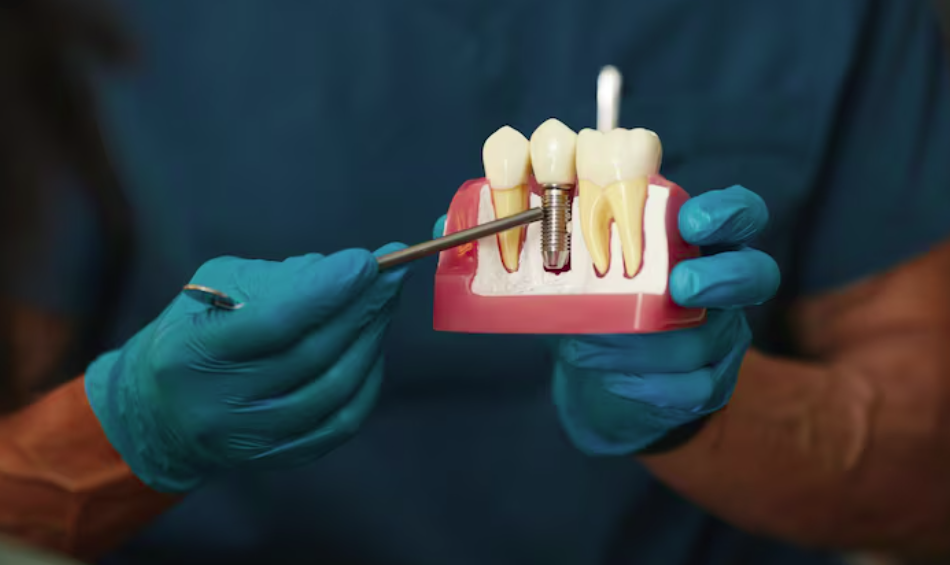
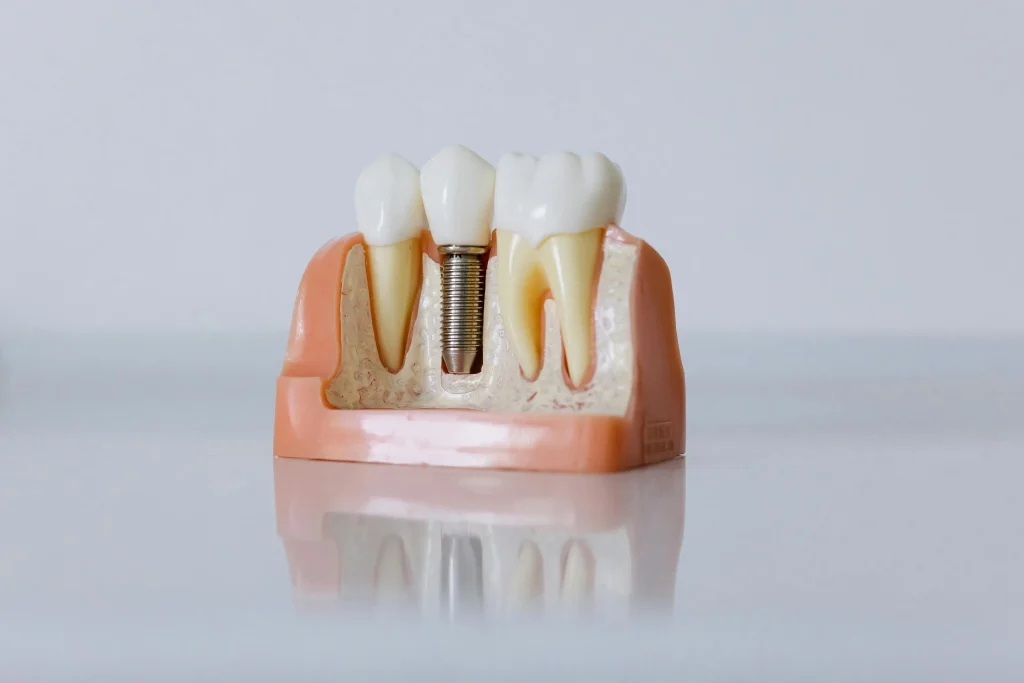
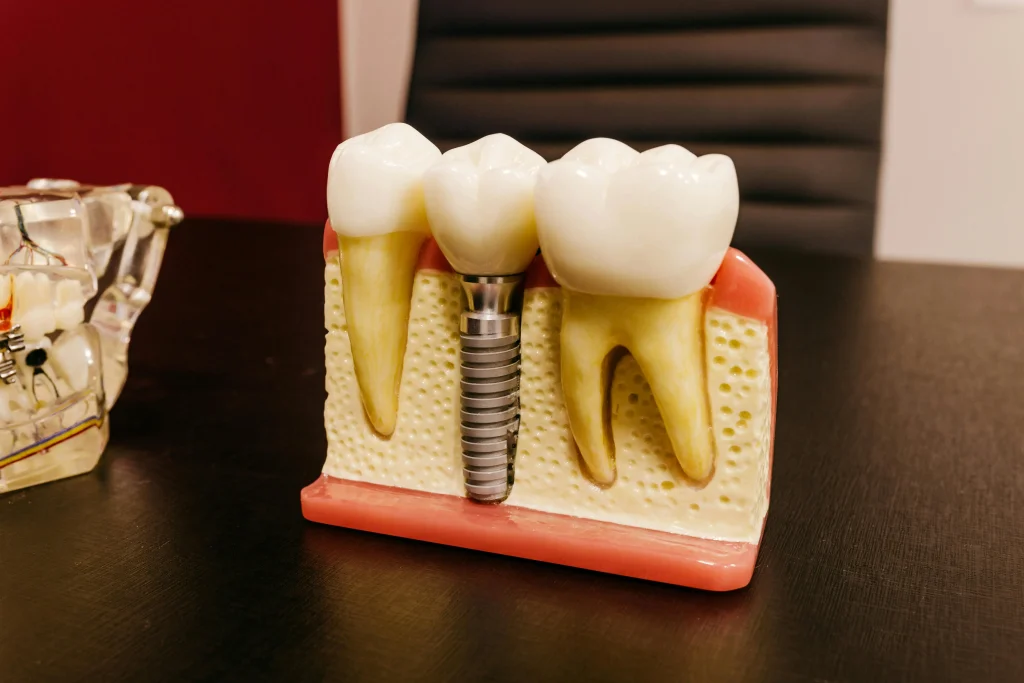
Dental implants are artificial “roots” (usually made of titanium or zirconia) that fuse with the bone (osseointegration) and serve as a base for a crown, a bridge, or a fixed prosthesis. Unlike a traditional bridge, they do not require reshaping the neighboring teeth, and unlike a removable denture, they offer much greater stability.
Clinically, long-term evidence shows high survival rates in large cohorts with extensive follow-up, although results always depend on risk factors (hygiene, smoking, periodontal control, bruxism, etc.).
Types of implants: which one is used in each case?
1) “Conventional” (endosteal) implant – the most common
This is today’s standard: an implant placed in the bone (lower or upper jaw) that later supports the final restoration. It is the most common type in dental clinics in Lima.
When it is a good fit: loss of one or more teeth with sufficient bone and healthy gums.
2) Immediate implants (same day as the extraction)
In selected cases, a tooth can be extracted and the implant placed in the same appointment. This is not always possible: it depends on infection, bone, primary stability, and planning.
Key point: do not confuse “immediate placement” with an “immediate permanent tooth.” In many cases, a temporary is placed.
3) Immediate loading / “fixed teeth in a short time”
Traditionally, many protocols leave the implant unloaded for months to support osseointegration (a classic range is 3–8 months).
Today, there are early or immediate loading protocols for very carefully selected cases (adequate stability and biomechanical control), but they are not “for everyone.”
4) Mini implants
These have a smaller diameter and are used in specific situations (for example, when space or bone volume is limited). They do not replace standard implants in every case.
5) Full-arch implants: All-on-4 / All-on-6
If many teeth (or all of them) are missing, options such as All-on-4 and All-on-6 make it possible to restore a full arch with 4 or 6 implants and a fixed bridge.
In Peru, these are handled in phases and can be attractive for dental tourism, because part of the treatment can be arranged during a short stay (depending on the case).
Materials: titanium, titanium-zirconium, and zirconia (what really changes?)
Titanium (and titanium alloys)
It has long been the “gold standard” thanks to its biocompatibility and clinical performance.
Zirconia (ceramic)
It is often chosen for esthetics (especially with thin gums) or patient preference. However, recent systematic reviews have found that, on average, titanium tends to show better survival rates and less marginal bone loss in certain comparative follow-ups, although long-term research is ongoing.
In practical terms: if your priority is “maximum evidence and predictability,” titanium is usually the first choice; if your case is highly esthetic and your periodontist/implant specialist recommends it, zirconia can be an option, but with a clear indication.
The complete process: from diagnosis to crown placement
A well-executed implant treatment is more like a “clinical project” than a single appointment.
Step 1) Evaluation and planning
This includes an exam, X-rays, and in many cases a CT scan (CBCT) to measure the bone and plan the ideal position.
If you are coming from abroad: a clinic experienced with international patients will usually help you put together a phased schedule (very useful for logistics if you are staying between Miraflores and San Isidro).
Step 2) Preliminary treatment (if needed)
Sometimes, before the implant, you may need:
- periodontal treatment (if there is gingivitis/periodontitis)
- extraction of non-restorable teeth
- a bone graft or sinus lift (depending on the case)
Step 3) Dental surgery (implant placement)
This is performed under local anesthesia (and in some cases sedation). The implant is inserted into the bone.
Step 4) Osseointegration (healing period)
The conventional protocol has historically left the implant unloaded for months (classic range of 3–8 months) to consolidate osseointegration.
In selected cases, early/immediate loading may be possible, but this is decided on clinical criteria (not marketing).
Step 5) Abutment + crown placement
Once the implant has integrated, the abutment is placed and the crown placement is carried out (the “visible part” that looks like a tooth). Important: the crown may wear down or need replacing before the implant does, depending on your bite and habits.
Recovery: real timelines (what usually happens)
- Swelling: usually most noticeable in the first 48–72 hours, then decreases markedly by day 4–5 (this may vary with the number of implants and complexity).
- Gum healing: often 1–2 weeks for the soft tissue to close properly.
- Osseointegration: several months (often 3–6 months as a clinical reference), depending on the bone and protocol.
Key tip (especially if you play sports or travel): initial “functional” recovery can be quick, but bone integration is biological and takes time; that is why a staged plan is so important in dental tourism.
Longevity: how long does an implant last?
Implants can last many years if plaque, gums, and bite forces are kept under control. Studies with large samples report high survival rates, and long-term meta-analyses emphasize the importance of follow-up and maintenance to sustain results.
What shortens their lifespan the most in practice:
- poor hygiene / peri-implantitis
- smoking
- uncontrolled periodontitis
- bruxism without a night guard
- poorly fitted crowns or overloading
Costs in 2026: realistic price ranges in Peru (Lima)
Prices vary depending on: the implant brand, the need for a bone graft, the type of crown (zirconia, porcelain, etc.), surgical complexity, CT scans/surgical guides, and whether it is a single-tooth or full-arch case.
1) Single implant (per tooth)
Local sources from 2024–2026 report typical ranges for treatment per tooth of around S/ 2,000 to S/ 5,000 (depending on the clinic and materials).
Some clinics publish “starting at” prices for the implant (surgical phase) or for the complete treatment; for example, 2026 listings show references starting at ~S/ 2,750 for a “dental implant.”
It is also common for the estimate to be split by phase (implant + restoration), with published references in USD for each stage.
In practical terms: always ask for a separate quote for: (1) the surgical phase + (2) the abutment + (3) the crown + (4) imaging/surgical guide + (5) any additional procedures.
2) Full-arch implants (All-on-4 / All-on-6)
For All-on-4/All-on-6 in Peru, some clinics publish a “first phase” starting at S/ 11,000 (per arch) for All-on-4 and starting at S/ 16,500 for All-on-6.
Informational content mentions average ranges (per arch) of around S/ 15,000 to S/ 25,000 in certain scenarios, although this depends on the type of final prosthesis and the phased plan.
3) Why is Peru seen as “more affordable”?
For many international patients, the combination of local prices + clinical quality + logistics in areas such as Miraflores/San Isidro makes Peru an attractive option for affordable dentistry within the framework of dental tourism in Peru (as long as you choose specialists, traceable materials, and a maintenance plan).
Checklist for choosing a clinic (especially if you are coming from abroad)
- They perform a complete diagnosis (including gums and bite).
- They explain the alternatives (bridge vs. implant vs. orthodontics + restoration).
- They give you a phased plan with timelines (ideal if you are traveling).
- They tell you the implant brand/material and what the price includes.
- They have a follow-up and maintenance protocol (peri-implantitis).
- If you have bruxism, they include a night guard/protection plan.
Dental implants are one of the most reliable solutions for replacing missing teeth, but they are “worth it” when done with proper planning, clinical criteria, and the right materials. In 2026, Peru (especially Lima) remains a competitive destination for international and local patients thanks to its range of specialists, technology, and the ability to organize treatment in phases—something key in dental tourism—while maintaining an affordable dentistry offering without sacrificing standards.