
Deep teeth cleaning: what is scaling and root planing?
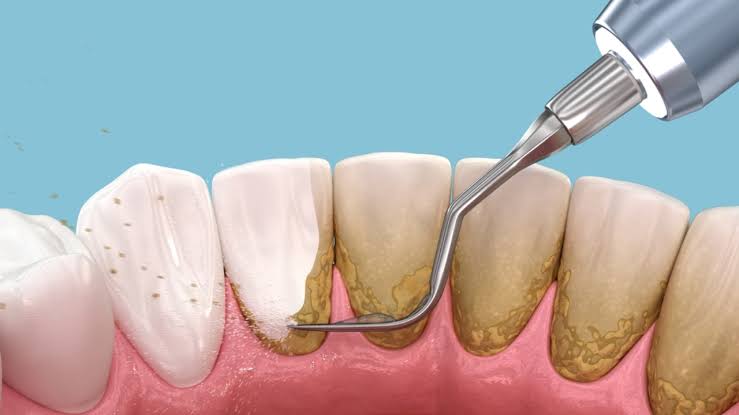
When your gums bleed while brushing, look swollen, or you notice persistent bad breath, it’s easy to assume a regular dental cleaning will take care of the problem. However, when plaque and tartar build up below the gumline, a deeper periodontal procedure may be needed.
Scaling and root planing is a non-surgical treatment used to clean the root surfaces of the teeth and manage certain periodontal (gum) diseases. Unlike a standard preventive cleaning, it works below the gums to remove bacterial deposits that cannot be eliminated by brushing or a routine prophylaxis alone.
But how do you know when you need a deep cleaning? Does it hurt? Is it done in a single visit? Is it the same as a regular tartar removal? Below, we explain what this procedure involves and why it can be an important part of gum disease treatment.
What is scaling and root planing?
Scaling and root planing, often simply called a deep teeth cleaning, is a thorough cleaning performed below the gumline.
The American Academy of Periodontology describes this procedure as a cleaning of the tooth root surfaces that removes plaque, calculus (tartar), and other deposits found inside periodontal pockets. Root planing then treats the root surface to promote a healthier periodontal environment.
The procedure has two main components:
Dental scaling
Scaling involves removing plaque and tartar that have built up both around the tooth and below the gums.
Once these deposits are inside a periodontal pocket, a toothbrush and dental floss can no longer remove them properly.
Root planing
After the deposits are removed, the root surface is carefully treated.
The goal is to remove attached deposits and leave a cleaner root surface, supporting the healing of the periodontal tissues.
Both phases are part of the same procedure.
Why might you need a deep dental cleaning?
When plaque accumulates around the teeth, bacteria can cause gum inflammation.
In the early stages, gingivitis may develop, with signs such as redness, swelling, and bleeding.
As periodontal disease progresses, the gums can pull away from the teeth and form spaces known as periodontal pockets. Bacteria and tartar collect inside these pockets and can no longer be properly removed with at-home hygiene. If the disease keeps advancing, the tissues and bone that support the teeth may be affected.
In these cases, a regular cleaning may not be enough, and your dentist may consider scaling and root planing.
Regular dental cleaning vs. scaling and root planing: are they the same?
No.
Although both procedures aim to improve oral health, they have different indications.
A standard dental cleaning is usually preventive and focuses mainly on removing plaque, tartar, and stains around the teeth, especially above or near the gumline.
Scaling and root planing, on the other hand, is a therapeutic periodontal procedure.
It works at a deeper level, specifically on the roots and inside the periodontal pockets.
In simple terms:
Regular cleaning: prevention and maintenance of a healthy mouth.
Deep cleaning: periodontal treatment when there are deposits and inflammation below the gums.
That’s why simply asking for a “stronger cleaning” doesn’t necessarily mean you need root scaling. A periodontal diagnosis must come first.
What symptoms may indicate a gum problem?
Periodontal disease can progress gradually and, at certain stages, may not cause significant pain.
That’s why it’s important to pay attention to other changes.
Some signs that should prompt a dental checkup include:
- Frequent bleeding when brushing or flossing.
- Swollen or red gums.
- Persistent bad breath.
- Receding gums.
- Tooth sensitivity.
- A feeling that your teeth look longer.
- Loose teeth.
- Changes in your bite.
- Visible tartar buildup.
- New gaps between teeth that weren’t there before.
Having one of these symptoms does not automatically confirm periodontitis, but it may justify a periodontal evaluation. The American Academy of Periodontology lists bleeding, swelling, persistent bad breath, gum recession, and loose teeth among the signs of periodontal disease.
How does the dentist know if you need scaling and root planing?
Before recommending any gum disease treatment, the dentist must assess your periodontal health.
The evaluation may include several elements.
Gum assessment
The dentist checks color, swelling, bleeding, recession, and other clinical signs.
Periodontal pocket measurement
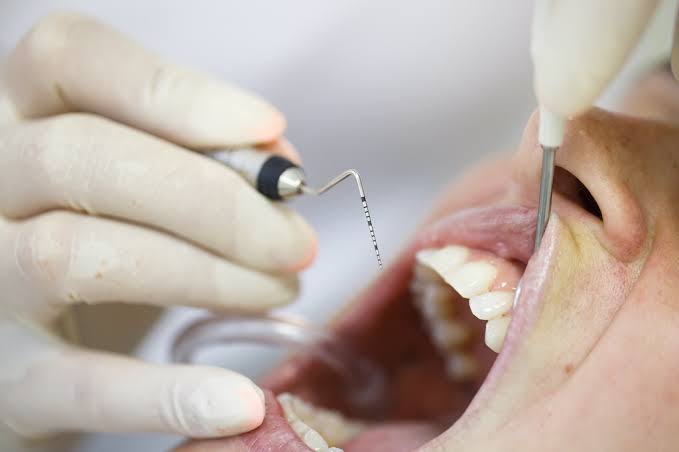
Using a periodontal probe, the space between the gum and the tooth is measured at several points.
This information helps assess the condition of the tissues surrounding the teeth.
X-rays
Imaging may be needed to evaluate the bone that supports the teeth and determine whether there are changes consistent with periodontal disease.
Review of risk factors
The dentist also needs to know your medical history, medications, habits, and previous dental treatments.
Based on this information, it can be determined whether you need a preventive cleaning, scaling and root planing, or another periodontal treatment.
How is scaling and root planing performed?
The procedure is tailored to the extent and severity of the periodontal disease.
In general terms, the dentist or periodontist works carefully below the gumline to remove accumulated deposits.
1. Periodontal evaluation
First, the teeth and areas that need treatment are identified.
Not everyone has the same level of involvement throughout the mouth.
2. Local anesthesia when appropriate
Depending on the depth of treatment and the patient’s sensitivity, local anesthesia may be used to make the procedure more comfortable.
3. Removal of subgingival tartar
Tartar that has built up around the root and inside the periodontal pockets is removed.
Hand instruments and ultrasonic devices may be used for this.
4. Smoothing the root surfaces
Once the deposits are removed, the tooth root is treated to remove irregularities and residual deposits.
5. Follow-up
Follow-up is an important part of treatment.
After a set period, the dentist may re-evaluate the gums to see how they have responded to the procedure and decide on the next steps.
Scaling and root planing is considered one of the main non-surgical options used in periodontal treatment.
Does scaling and root planing hurt?
One of the most common questions about a deep cleaning is whether it’s painful.
The experience depends on the patient’s sensitivity, the depth of the periodontal pockets, and the extent of treatment.
When needed, the dentist can use local anesthesia to reduce discomfort during the procedure.
After the appointment, there may be temporary sensitivity in the teeth and gums. Your dentist will explain the aftercare needed for your specific case.
If you feel very anxious about dental procedures, let the team know before you start so they can explain the options available to make your visit more comfortable.
How long does a deep cleaning take?
There is no one-size-fits-all duration.
It mainly depends on:
- The number of teeth affected.
- The depth of the pockets.
- The amount of tartar buildup.
- The patient’s sensitivity.
- The complexity of the case.
For some patients, the whole mouth can be treated according to the plan set by the dentist, while for others treatment is divided by quadrants or across several sessions.
That’s why a prior evaluation is essential.
What happens after scaling and root planing?
The procedure doesn’t end when you leave the office.
The response of your gums needs to be monitored afterward.
After treatment, your dentist may recommend:
- Gentle brushing.
- Proper use of dental floss or interdental cleaners.
- Avoiding certain foods during the first few hours if there is sensitivity.
- Using specific products when indicated.
- Attending periodontal follow-up visits.
- Keeping a set schedule of professional cleanings.
Follow-up is especially important because periodontal diseases may require ongoing maintenance.
Does a deep cleaning permanently cure periodontitis?
The goal of periodontal treatment is to control infection and inflammation and preserve the tissues that support the teeth.
Scaling and root planing is usually one of the first non-surgical interventions for periodontal disease. Afterward, the tissue response needs to be evaluated to determine whether additional procedures are required.
In addition, the long-term outcome depends largely on maintenance.
Good oral hygiene and professional checkups remain necessary even after the initial phase of treatment is complete.
What happens if periodontal disease is left untreated?
When gum disease progresses without treatment, it can compromise the tissues that support the teeth.
In advanced stages, bone support can be lost and teeth can become looser. Untreated periodontal disease may eventually contribute to tooth loss.
That’s why frequent bleeding or persistent inflammation shouldn’t simply be considered “normal.”
Detecting the problem early allows the dentist to set up an appropriate plan before the damage becomes greater.
What is the difference between tartar removal and root scaling?
Although both procedures remove tartar, they are not exactly the same.
Dental tartar removal (known in Peru as “destartraje”) aims to remove tartar deposits attached to the teeth.
Periodontal scaling works specifically in areas affected by periodontal disease, including root surfaces located below the gum.
That’s why the necessary procedure should be defined after checking your periodontal health, not just based on the amount of visible tartar.
Who performs a deep cleaning?
Depending on the case, the procedure may be performed by a dentist trained in periodontal care or by a periodontist.
A periodontist is a dentist who specializes in the prevention, diagnosis, and treatment of gum disease, as well as other procedures involving the tissues that support the teeth.
More complex cases may require specialized care and additional treatments.
How much does scaling and root planing cost?
The price depends on each patient’s specific needs.
Factors that can affect the cost include:
- The number of affected areas.
- The number of teeth that need treatment.
- The severity of the periodontal disease.
- The need for X-rays or additional tests.
- The number of sessions required.
- Follow-up visits.
For this reason, an accurate quote should be provided after an evaluation.
A search for teeth cleaning in Peru may show a range of prices, but it’s important to distinguish a preventive prophylaxis from a deep periodontal treatment, since they are not equivalent procedures.
Can I get a deep teeth cleaning during a trip to Peru?
International patients visiting Lima can have a periodontal evaluation during their stay.
This can be especially useful for people who use their trip to complete several dental treatments and want to check the health of their gums before procedures such as implants, crowns, or cosmetic treatments.
If you are traveling specifically for a teeth cleaning in Peru or periodontal treatment, it’s best to schedule your consultation in advance.
The dental team can tell you whether you need:
- An initial evaluation.
- X-rays.
- A regular cleaning.
- Scaling and root planing.
- More than one session.
- A follow-up appointment.
This helps organize your treatment within the time you have before returning home.
Periodontal treatment in Miraflores and San Isidro
If you live in Miraflores or San Isidro, or are staying in these neighborhoods during your time in Lima, starting with a periodontal evaluation lets you know exactly what type of cleaning you need.
Not everyone with tartar needs scaling and root planing, just as a regular cleaning isn’t enough for every patient with periodontal disease.
The diagnosis determines the right procedure.
Frequently asked questions about scaling and root planing
Is scaling and root planing the same as a deep cleaning?
Yes. “Deep cleaning” is a common way to refer to scaling and root planing, especially when the treatment is performed below the gumline.
Do I need anesthesia for a deep cleaning?
Local anesthesia may be used depending on sensitivity, the depth of treatment, and the patient’s characteristics. Your dentist will determine whether it’s needed.
Why do my gums bleed when I brush?
Bleeding may be associated with gum inflammation, although there are several possible causes. If it happens frequently, it’s a good idea to have a dental evaluation.
Does a regular cleaning remove tartar below the gums?
A preventive cleaning does not replace a periodontal procedure when there are deep deposits and periodontal pockets. In those cases, scaling and root planing may be necessary.
How often do I need a deep cleaning?
It shouldn’t be done on a standard schedule like a preventive cleaning. It is indicated when there is a periodontal condition that justifies it. After treatment, a personalized maintenance program can be established.
Can I have root scaling if I have implants?
Periodontal and peri-implant health must be evaluated individually. If you have implants, let your dentist know before the procedure so they can determine the appropriate treatment.
Do your gums bleed? An evaluation can help you find out why
Bleeding, swelling, or persistent bad breath may indicate that your gums need more than a regular cleaning.
Scaling and root planing targets deposits located below the gum and is an important tool in gum disease treatment.
However, not everyone needs this procedure.
The best way to find out is a periodontal evaluation that assesses the condition of your gums, measures the pockets around your teeth, and establishes the appropriate treatment.
If you live in Miraflores or San Isidro, or are planning a dental trip to Lima, you can schedule a checkup to determine whether you need a regular cleaning, tartar removal, or a deeper periodontal treatment.