
Dental Sedation Options in Peru: What to Expect and How Much It Costs
Fear of the dentist is far more common than most people think. For some, it shows up as nerves before an appointment; for others, the anxiety is intense enough to put off much-needed treatment for years.
When you are also traveling and need a dental procedure in another country, that worry can grow. You are in an unfamiliar environment, you may only have a few days available, and you need to feel confident before undergoing treatment.
In these cases, dental sedation can be used to help patients stay calmer and more comfortable during certain procedures.
Today there are different levels and techniques of sedation, from nitrous oxide to deeper modalities that require specific evaluation and monitoring. Not every patient needs the same type, and sedation does not necessarily mean being completely asleep.
If you are considering dental treatment during a trip to Peru, knowing the available options will help you better understand what to expect, how to prepare, and what determines the cost.
What is dental sedation?
Dental sedation involves the use of certain medications or techniques to reduce anxiety and help the patient tolerate a dental procedure more easily.
Depending on the level used, a person may remain fully conscious and respond normally to the dentist’s instructions, or reach deeper levels of sedation.
Current American Dental Association guidelines distinguish between minimal, moderate, and deep sedation, as well as general anesthesia. Each level involves different requirements for evaluation, monitoring, and professional training.
That is why simply talking about “sedation” can be too general.
The dentist must determine which modality is appropriate based on the treatment you need, your level of anxiety, and your medical history.
Are dental sedation and local anesthesia the same thing?
No.
This is one of the most common misconceptions.
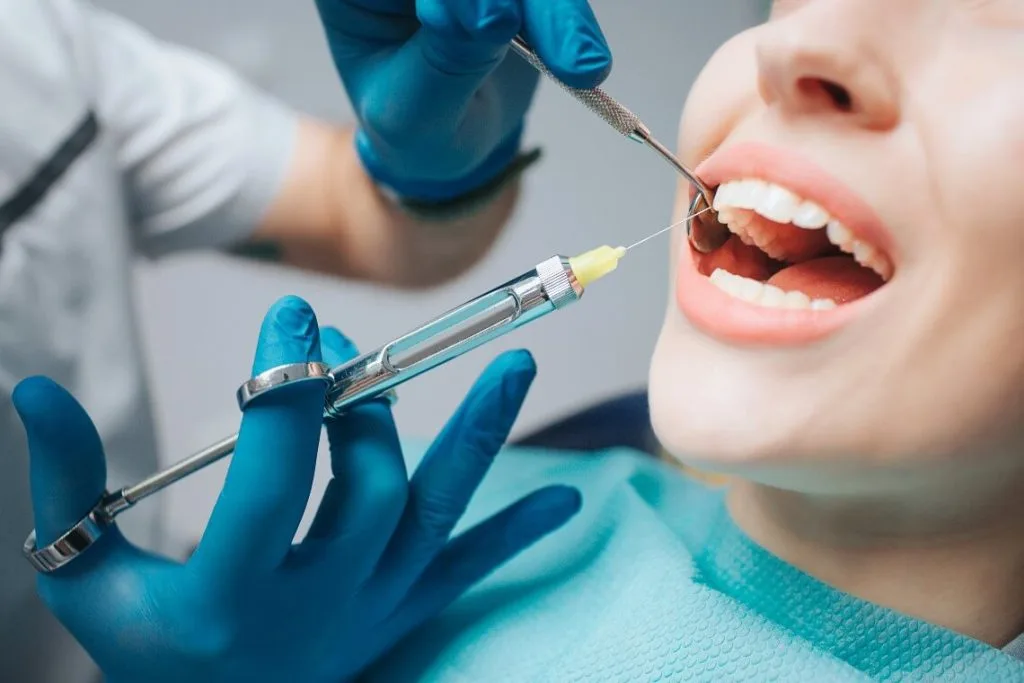
Local anesthesia acts mainly on the area being treated and temporarily blocks sensation.
Dental sedation, on the other hand, aims to reduce anxiety, promote relaxation, and make the experience more tolerable.
In many treatments, both can be used together.
For example, a patient who needs a wisdom tooth removed might receive local anesthesia to control sensation in the area and sedation to reduce anxiety during surgery.
That is why pain-free dentistry should be understood as a set of measures designed to improve comfort and manage pain and anxiety, not as a promise that no patient will ever feel any discomfort at all.
Who can benefit from dental sedation?
Sedation is not reserved only for complex surgeries.
It can be considered in a variety of situations, always after a professional evaluation.
Patients who may benefit include those who have:
- Fear of the dentist or severe anxiety.
- Negative past dental experiences.
- A very strong gag reflex.
- Difficulty staying in the dental chair for long periods.
- A need for lengthy procedures.
- A need for several procedures in a single session.
- Surgical treatments that may cause anxiety.
- Certain clinical needs that make conventional care difficult.
For international patients, it can also be helpful when they want to complete several treatments during a limited stay in Lima.
However, combining several procedures into a single session will not always be appropriate. The decision depends on your health and the type of treatment.
Types of dental sedation: what options are available?
There are different alternatives, and not all of them produce the same level of relaxation.
Nitrous oxide sedation
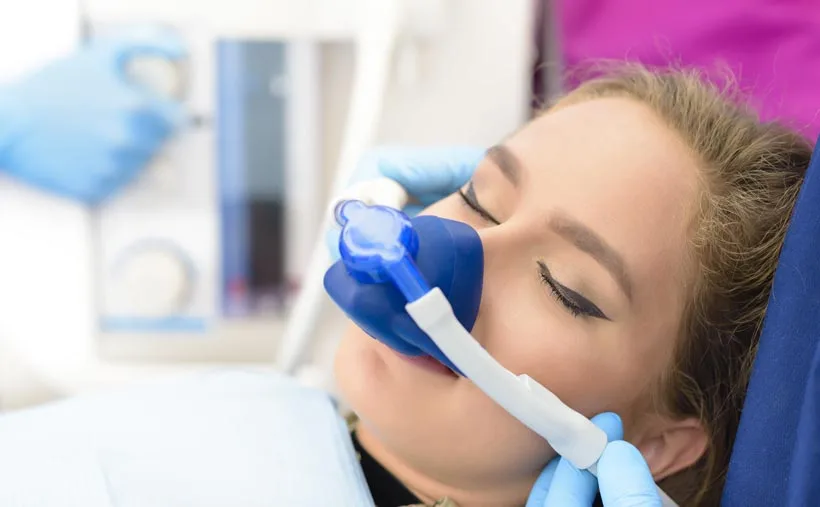
Nitrous oxide, sometimes informally known as “laughing gas,” is delivered through a small mask placed over the nose.
The patient breathes a controlled mixture of nitrous oxide and oxygen.
They usually stay awake and can communicate with the dental team.
The American Dental Association considers the combination of nitrous oxide and oxygen, when used appropriately, to be a safe and effective method for managing pain and anxiety in dentistry. It also has a relatively fast onset and clears quickly.
Because of these characteristics, it is often used for patients who need to relax but do not require deeper sedation.
Oral sedation
Another option is to give medication by mouth before the procedure.
Its intensity can vary depending on the medication, the dose, the patient’s condition, and the planned treatment.
The patient may feel drowsy and very relaxed, but their level of consciousness will depend on the protocol used.
When sedative medications are used, instructions regarding eating, having a companion, driving, and recovery must be followed carefully.
IV sedation
IV sedation is delivered directly through a vein and allows the level of sedation to be adjusted during the procedure.
It may be used when a deeper level of relaxation is needed or for certain lengthy procedures.
Preparation, monitoring, and professional requirements increase as the depth of sedation increases. Current ADA recommendations emphasize patient evaluation, clinical monitoring, emergency preparedness, and defined criteria for recovery and discharge.
Deep sedation
For certain procedures, deeper sedation may be considered.
At this level, the patient’s ability to respond is significantly reduced, and stricter monitoring protocols are required.
It should not automatically be confused with general anesthesia, although both require levels of preparation and control different from those of minimal sedation.
The choice should be made after a medical and dental assessment.
What is the best sedation for someone who is afraid of the dentist?
There is no single modality that is best for everyone.
The level of fear of the dentist is only one of the factors to consider.
The dentist also needs to evaluate:
- Age.
- Overall health.
- Medications you take.
- Allergies.
- Respiratory conditions.
- Cardiovascular conditions.
- Previous experiences with sedation.
- Length of the treatment.
- Complexity of the procedure.
- The patient’s level of cooperation.
A person with moderate anxiety who needs a dental filling may require a completely different approach from someone with a severe phobia who needs a surgery lasting several hours.
That is why sedation must be personalized.
What does dental sedation feel like?
The experience varies depending on the type used.
With minimal modalities, such as nitrous oxide, patients usually stay awake but feel more relaxed.
Some people describe:
- A sense of calm.
- Slight drowsiness.
- Less concern about the procedure.
- A feeling that time passes more quickly.
- Less body tension.
With deeper levels, there may be more drowsiness and limited memory of parts of the procedure.
Individual responses are not identical in every patient.
For this reason, the professional must observe and monitor the patient’s condition throughout the appointment.
Will I be asleep during treatment?
Not necessarily.
This is another important distinction.
Dental sedation covers different levels, and with minimal or moderate modalities the patient can remain conscious.
For example, with nitrous oxide you can usually hear the dentist and respond to their instructions.
General anesthesia does involve loss of consciousness, but it should not be used as a synonym for every type of sedation.
Before the procedure, the team should explain exactly which level will be used and what you can expect.
Does dental sedation eliminate pain?
Its main role is to manage anxiety and improve comfort.
On its own, sedation does not necessarily replace local anesthesia.
If a procedure may cause pain, appropriate anesthetic measures are usually used to control sensation.
That is why a modern approach to pain-free dentistry may combine:
- Local anesthesia.
- Sedation when indicated.
- Minimally invasive techniques.
- Communication with the patient.
- Breaks during treatment.
- Proper management of post-treatment pain.
Each element serves a different purpose.
Which treatments can sedation be used for?
It can be considered for different procedures depending on the patient.
These include:
Wisdom tooth extraction
Third molar surgery is one of the procedures where sedation can be especially appealing for anxious patients.
Combining anesthesia and sedation can make for a calmer experience during a surgical extraction.
Dental implants
Some patients feel anxious about having dental implants placed, especially when several will be placed in one session.
Whether sedation is needed will depend on the extent of the treatment and individual characteristics.
Oral surgery
More extensive surgical procedures may require different anxiety-management strategies.
Root canal treatment
Although a root canal can usually be performed with local anesthesia, a person with severe anxiety could benefit from additional measures.
Extensive restorative treatments
Patients who need several crowns, fillings, or other lengthy procedures may find it hard to stay comfortable for several hours.
In certain cases, sedation may be considered.
Is dental sedation safe?
Safety depends on proper patient selection, the use of the appropriate technique, and the procedure being performed by trained professionals following established protocols.
In 2026, the ADA updated its recommendations on sedation and anesthesia, reinforcing aspects such as pre-procedure evaluation, vital signs, monitoring, emergency preparedness, recovery, and documentation.
Before receiving sedation, you should inform the team about:
- Existing medical conditions.
- Previous surgeries.
- Medications.
- Supplements.
- Allergies.
- Pregnancy.
- Previous experiences with anesthesia or sedation.
- Use of alcohol or other substances.
- Breathing or sleep-related problems.
Never hide medical information out of fear that the dentist will cancel the procedure.
That information makes it possible to choose a safer option.
What should you do before receiving sedation?
Instructions depend on the modality.
In some cases, you may need to avoid eating for a certain number of hours; in others, the recommendations may be different.
Patients should follow the instructions provided by the clinic exactly.
In addition, depending on the type of sedation, you may be asked to come with a responsible adult.
Before your appointment, it is also a good idea to:
- Get enough sleep.
- Report any recent changes in your health.
- Bring a list of your medications.
- Avoid self-medicating.
- Confirm when you should stop eating or drinking.
- Arrange transportation for after the procedure.
Do not assume the same instructions you were given previously for another treatment apply.
Can I drive after sedation?
It depends on the modality used.
After certain forms of oral, IV, or deep sedation, you must not drive, and someone will need to accompany you.
The effects of some techniques can last for several hours.
With nitrous oxide, recovery is usually much faster because the gas clears quickly once it is stopped; even so, discharge and permitted activities should follow the professional’s specific instructions.
If you are visiting Lima, arrange your transportation before going to the clinic.
How much does dental sedation cost in Peru?
This is one of the main questions from both local and international patients.
There is no single price for dental sedation in Peru, because the cost depends mainly on:
- The modality used.
- The length of the procedure.
- The level of sedation required.
- The professional who must administer it.
- The need for additional monitoring.
- The dental treatment to be performed.
- The number of procedures performed during the session.
At The Dental Clinic, currently published information indicates that nitrous oxide sedation starts at USD 350 per session. Deep sedation requires different preparation and monitoring, so its price is determined after evaluating the case.
This price covers the sedation only and should not be confused with the cost of the dental treatment performed during the same session.
For example, an extraction, implant, or restorative procedure will have its own treatment estimate.
Why does deep sedation cost more?
As the level of sedation increases, so do the resources needed to perform it properly.
Factors may include:
- More extensive monitoring.
- Specialized equipment.
- Additional professional staff.
- Procedure time.
- Pre-operative preparation.
- Recovery period.
- Medications used.
That is why comparing prices alone between modalities does not tell you which one is most suitable.
The right option should be chosen first based on clinical criteria.
Is it more affordable to get dental treatment with sedation in Peru?
Many international patients consider Peru because certain treatments may cost differently than in their home countries.
However, comparing fees alone can be misleading.
If you are looking for dental care abroad, it is wise to request an estimate that breaks down:
- Evaluation.
- Diagnostic tests.
- Dental treatment.
- Sedation.
- Medications, when applicable.
- Follow-up visits.
This way you can compare the total cost of treatment, not just an initial advertised figure.
Dental sedation for nervous travelers
Traveling for dental care can bring a unique mix of emotions.
On top of the usual fear of the dentist, you may have concerns such as:
- “What if something goes wrong while I’m away from home?”
- “Will I be able to fly afterward?”
- “Will I have enough time to recover?”
- “How will follow-up work once I get back?”
- “Will I understand all the instructions?”
For patients with fear of the dentist, getting answers to these questions before the trip can be just as important as choosing the treatment.
A clinic experienced with international patients should know your arrival and departure dates to properly schedule the evaluation, procedure, and follow-up visits.
How many days do I need to stay in Lima?
There is no standard number.
It depends on the treatment you are having.
A simple filling with minimal sedation does not require the same planning as extensive oral surgery.
If you are traveling specifically for treatment, it is a good idea to share:
- Your arrival date.
- Your return flight date.
- The planned procedure.
- Medical conditions or medications.
- Your level of anxiety.
- Whether you will be traveling with someone.
This helps determine whether your itinerary is compatible with the treatment.
For surgical procedures, it is especially important to allow time for recovery and a follow-up visit before leaving the city.
Can I fly right after?
The answer depends mainly on the dental procedure performed, not just on the sedation.
Some procedures may require a recovery period before certain activities.
That is why anyone considering a surgical extraction, several implants, or oral surgery during a trip should not automatically book their return flight for just a few hours later.
The dentist should provide recommendations based on your case.
What happens after sedation?
After the procedure, the team must confirm that the patient meets the appropriate criteria before discharge.
Instructions may include:
- Resting.
- Not driving.
- Having someone stay with you.
- Taking the prescribed medication.
- Following the recommended diet.
- Avoiding alcohol.
- Not making important decisions during the recovery period, when applicable.
- Contacting the clinic if any unexpected symptoms appear.
Specific recommendations vary depending on the level of sedation and the treatment performed.
Dental sedation if I have severe anxiety but need several treatments?
It can be evaluated.
This scenario is common among people who have avoided the dentist for years precisely because of fear.
When they finally come in, they may need several fillings, a cleaning, a root canal, extractions, or other treatments.
A comprehensive dental plan makes it possible to determine which procedures can reasonably be combined.
In some cases, dental sedation can make longer sessions possible.
However, “doing everything in one day” is not always the best option.
Safety and proper planning must come first.
What should you ask before choosing a clinic that offers sedation?
If you are comparing pain-free dentistry options in Lima, it pays to look beyond price.
Ask:
- What type of sedation do you offer?
- Who administers it?
- What evaluation do I need beforehand?
- How will I be monitored?
- Do I need someone to come with me?
- How long is the recovery?
- What can I eat beforehand?
- When can I return to my usual activities?
- What does the estimate include?
- How can I contact the clinic after I return home?
The answers should be specific to your case.
Frequently asked questions about dental sedation
Will dental sedation put me completely to sleep?
Not always. With minimal sedation or certain forms of conscious sedation, you can stay awake and respond to instructions. Deeper levels produce a greater reduction in consciousness.
Are sedation and anesthesia the same thing?
No. Local anesthesia mainly controls sensation in a specific area, while dental sedation is used to reduce anxiety and promote relaxation.
Is nitrous oxide safe?
When used appropriately, the ADA considers the combination of nitrous oxide and oxygen a safe and effective option for managing anxiety and pain in dentistry.
Do I need sedation to have a wisdom tooth removed?
Not every patient needs it. The decision depends on the complexity of the extraction and the level of anxiety, among other factors.
How much does dental sedation cost in Lima?
The cost depends on the type and duration. The Dental Clinic currently lists nitrous oxide sedation from USD 350 per session; deeper modalities require an individual evaluation and estimate.
Can I receive sedation if I have an extreme fear of the dentist?
Fear of the dentist is precisely one of the reasons sedation may be considered. However, your medical history and the procedure you need must be reviewed first.
Can I go to my appointment alone?
It depends on the type of sedation. Some modalities require you to arrange a ride home with a responsible companion. Follow the clinic’s instructions before your appointment.
Can dental sedation be used for several treatments in the same session?
In certain cases, it can make longer procedures easier, but whether treatments can be combined depends on the clinical situation and the time required.
If fear of the dentist is delaying your treatment, there are options
Constantly putting off an appointment because of anxiety can allow problems that start out small to become more complex.
A cavity can progress, an infection can worsen, or a tooth that initially needed a filling may end up requiring more extensive treatment.
Dental sedation offers different options for patients who need to manage anxiety during dental care.
From nitrous oxide to deeper modalities, the choice should be made individually after reviewing your health, the treatment, and your level of fear of the dentist.
If you live in Miraflores or San Isidro, or are planning a dental trip to Lima, you can start with an evaluation to find out which modality may be appropriate and request a complete estimate before the procedure.
The goal of modern pain-free dentistry is not simply to “put the patient to sleep,” but to combine diagnosis, anesthesia, anxiety management, and safety protocols so the dental experience is as comfortable and predictable as possible.