
Invisalign vs. braces: which is better for you if you're traveling?
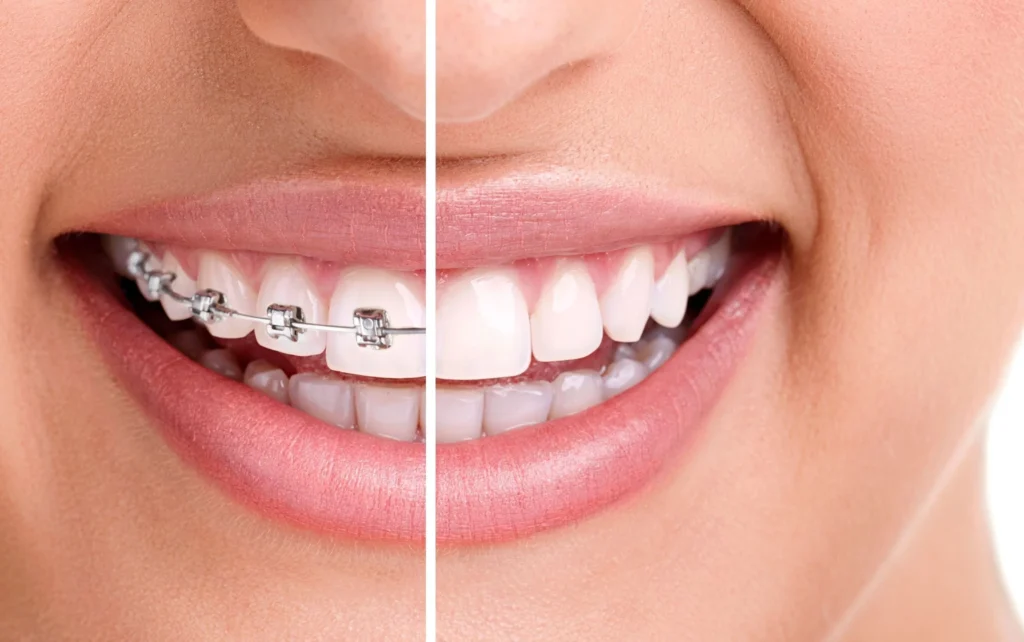
If you’re planning a trip to Peru and want to make the most of your stay to start or continue dental treatment, you’ve probably wondered which orthodontic option makes the most sense: Invisalign, other clear aligners, or traditional braces.
The answer depends on several factors. How long you’ll be in the country, the complexity of your case, how often you’ll need checkups, and your ability to continue treatment once you’re back home can all directly influence the choice.
For international patients, choosing between aligners and braces in Peru shouldn’t be based on looks or price alone. It’s also important to consider treatment logistics, follow-up care, and the possibility of remote checkups or coordinating care with another orthodontist.
Below, we review the main differences between the two options to help you understand which one may best fit your needs.
Invisalign and clear aligners: how do they work?
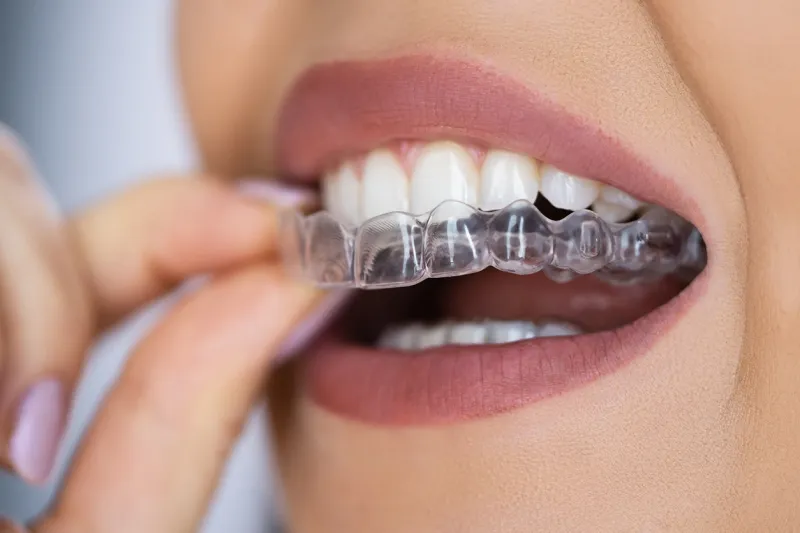
Invisalign is one of the best-known clear aligner systems. These are removable trays custom-made for each patient that apply gradual forces to the teeth to change their position.
Treatment begins with an assessment of your bite, photos, X-rays, and digital records of your mouth. Based on this information, the tooth movements are planned and a series of aligners is fabricated.
Each set is worn for the period indicated by the orthodontist before moving on to the next.
One of the main differences compared with other orthodontic appliances is that aligners can be removed to eat, drink certain beverages, and brush and floss.
This feature largely explains their popularity among adults and frequent travelers.
How do traditional braces work?
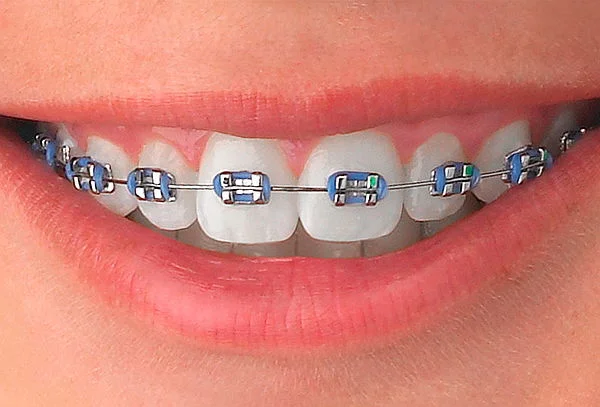
Braces are small devices bonded to the surface of the teeth and connected by an orthodontic archwire.
Unlike aligners, they stay in place throughout treatment and cannot be removed by the patient.
The orthodontist makes periodic adjustments to create controlled tooth movements until the planned goals are reached.
Today there are several options, including:
- Metal braces.
- Aesthetic (tooth-colored) braces.
- Sapphire braces.
- Self-ligating systems.
- Other complementary devices depending on the case.
Although some patients prefer virtually invisible options, braces remain a widely used tool in orthodontics, particularly in cases that require certain movements or specific biomechanical control.
Invisalign vs. braces: key differences
Both clear aligners and braces aim to correct problems related to tooth position and bite.
However, the experience during treatment can be quite different.
Aesthetics
This is often one of the main reasons many adults prefer Invisalign.
Aligners are clear and, although they may include small attachments on the teeth, they are usually less noticeable than metal braces.
This can be especially appealing for executives, professionals, people in public-facing jobs, or travelers who want to keep a discreet appearance during treatment.
Traditional braces are more visible, although aesthetic or sapphire braces can partially reduce this visual impact.
Comfort at mealtimes
Clear aligners are removed before eating.
As a result, patients can usually keep a diet closer to their normal one, as long as they put the aligners back in after proper oral hygiene.
With braces, a few extra precautions apply. Very hard or sticky foods, or anything that could dislodge a component of the orthodontic appliance, should be eaten with care or avoided according to the specialist’s instructions.
For someone who is traveling and wants to explore the local cuisine, this difference can matter.
Oral hygiene
Being able to remove the aligners makes brushing and flossing easier.
With braces, hygiene requires more effort because of the wires and components attached to the teeth.
This doesn’t mean braces automatically cause hygiene problems, but the patient must follow a more careful routine to prevent plaque from building up around the appliances.
Patient discipline
This is a fundamental difference.
Braces stay in place 24 hours a day. Their effectiveness therefore doesn’t depend on the patient remembering to wear the appliance.
Clear aligners, on the other hand, must be worn for the number of hours prescribed by the orthodontist. Taking them out for long periods or wearing them inconsistently can affect treatment progress.
For this reason, Invisalign requires a greater commitment from the patient.
Which is more convenient for someone who is traveling?
For an international patient, this question takes on an additional dimension.
It’s not enough to determine which system is clinically appropriate. You also need to consider how treatment will continue after you leave Peru.
In some scenarios, clear aligners may offer logistical advantages.
The orthodontist can provide several sets of aligners according to a set plan and schedule in-person checkups when the patient returns to Lima or when needed.
Some aspects of follow-up can also be supplemented with digital tools, photos, or remote consultations, although this doesn’t replace every in-person visit that may be required.
With braces, physical adjustments made by the specialist usually play a bigger role in periodic follow-up.
For this reason, a patient who will only be in Peru for a few days should talk openly with the orthodontist about how treatment will continue.
Can I start Invisalign during a vacation in Peru?
In certain cases, yes.
However, starting orthodontic treatment involves more than simply making the aligners.
A complete diagnosis must come first.
The specialist needs to assess aspects such as:
- Tooth position.
- The relationship between the upper and lower arches.
- Type of bite.
- Gum condition.
- Presence of cavities.
- Periodontal health.
- Need for extractions.
- Position of the wisdom teeth.
- Overall condition of the mouth.
X-rays and other tests may also be needed before defining the treatment.
For international patients, it’s especially important to share from the first consultation how long they’ll be staying in Lima and how often they could come back.
What if I’ll only be in Lima for one or two weeks?
A short stay may be enough for the initial evaluation and to determine whether you’re a candidate for certain treatments.
Depending on the system chosen and the clinical plan, some stages may require more time.
For example, with clear aligner treatment, once the scan is done and the plan is defined, the aligners need to be fabricated.
That’s why, if you’re traveling specifically to start dental treatment, it’s a good idea to contact the clinic in advance.
That way, the dental team can tell you what information to send before your trip and how much time you should set aside for each stage.
Are braces better for complex cases?
Braces give the orthodontist a high level of control over different tooth movements and remain a particularly useful option in many cases.
However, modern aligner systems can also treat an increasingly wide range of issues.
There’s no universal rule that braces are always better for complex cases or that Invisalign is only for minor problems.
The choice depends on the specific diagnosis.
Factors such as significant tooth rotations, bite discrepancies, the need for extractions, or complex movements can influence the decision.
Some treatments may also require combining orthodontic appliances with elastics, attachments, or other auxiliary devices.
What happens if I lose an aligner while traveling?
This is a situation you should plan for before starting treatment.
If you’re using Invisalign or another clear aligner system, losing one doesn’t necessarily mean your treatment is ruined, but it’s important to contact your orthodontist.
Depending on the stage, the specialist may advise you to temporarily wear the previous aligner, move on to the next one, or order a replacement.
The decision should be made based on the planned tooth movement.
That’s why patients who travel frequently can benefit from having clear instructions before leaving the country.
What happens if a bracket comes off while I’m away?
Braces can also run into minor issues during a trip.
A bracket may come loose, a wire may shift, or a component may cause discomfort.
Many of these situations are not an immediate medical emergency, but they should be checked by a dentist when appropriate.
If you’re getting braces in Peru and will later return to another country, it’s wise to arrange in advance who will handle your checkups and how your treatment records will be shared.
Invisalign and braces prices in Peru
For many foreign patients, cost is one of the factors in considering dental treatment in Peru.
However, the price of braces in Peru and the price of Invisalign can vary considerably depending on:
- The complexity of the case.
- The estimated length of treatment.
- The type of braces.
- The aligner system used.
- The number of aligners needed.
- Diagnostic tests.
- Checkups included.
- Complementary procedures.
For this reason, comparing only an initial price can be misleading.
The right approach is to request a complete quote after an orthodontic evaluation.
Does Invisalign always cost more than braces?
Not necessarily.
In many cases, treatment with Invisalign or other aligners may cost more than traditional metal braces, but this difference depends on the complexity and length of treatment.
In addition, there are different categories of aligner treatment depending on how many movements the patient needs.
The quote should be considered alongside the benefits, limitations, and required follow-up.
Which option is more discreet?
If aesthetics is your main priority, clear aligners usually offer a clear advantage.
For someone who travels for business, attends meetings, takes part in events, or simply doesn’t want their orthodontic treatment to be too noticeable, this can be an important consideration.
Sapphire braces are also a more discreet alternative to traditional metal braces.
However, they are still fixed orthodontic appliances and can be noticed up close.
Which option requires fewer dental visits?
How often you need checkups depends on the treatment.
Aligner systems may allow a different schedule than braces and, in some cases, longer intervals between visits.
This can be relevant for international patients.
However, it doesn’t mean Invisalign can be done without professional supervision.
During treatment, changes in the bite, loss of aligner fit, or movements that don’t progress exactly as planned can occur.
The orthodontist needs to review progress periodically.
Orthodontics for international patients in Lima
Undergoing dental treatment outside your home country requires planning.
If you’re considering starting orthodontics in Peru, let the specialist know from the beginning that you’re an international patient.
This allows them to design a protocol that takes into account:
- The length of your stay in Lima.
- Your upcoming travel dates.
- Whether you can come back for checkups.
- Access to an orthodontist in your home country.
- Remote follow-up when appropriate.
- How many aligners you can take with you.
- Clinical records another specialist might need.
For people staying in Miraflores or San Isidro, choosing a nearby clinic can also make checkups easier during the initial phase of treatment.
Invisalign or braces: which should you choose?
There is no universally superior option.
Clear aligners can be especially appealing for patients seeking discretion, comfort while eating, and easier oral hygiene.
Braces can offer advantages when the specialist needs certain types of control over tooth movement, and they don’t depend on the patient remembering to wear them.
For someone who travels, the length of stay and follow-up care must also be considered.
That’s why the best decision starts with an orthodontic evaluation.
Frequently asked questions about Invisalign and braces
Can I use Invisalign if I live outside Peru?
In certain cases, yes. Feasibility depends on the complexity of treatment, how often checkups are needed, and whether follow-up can be coordinated after you return home.
Does Invisalign work the same way as braces?
Both aim to move teeth, but they use different mechanisms. The right choice depends on the diagnosis and treatment goals.
How many hours a day should I wear my aligners?
Clear aligners should be worn according to your orthodontist’s specific instructions, usually for most of the day, removing them mainly to eat and clean your teeth.
Are braces faster than Invisalign?
Not necessarily. Treatment time depends mainly on the complexity of the case, the movements required, and how closely instructions are followed.
How much do braces cost in Peru?
The cost of braces in Peru depends on the type of appliance, the complexity of treatment, its length, and the checkups included. An evaluation allows a personalized quote to be prepared.
Can I switch from braces to aligners?
In some cases a transition can be considered, but it must be planned by the orthodontist after reviewing treatment progress and the current condition of your teeth.
Plan your orthodontic treatment before you travel
If you’re visiting Peru and considering improving the position of your teeth, an evaluation beforehand can help you determine whether Invisalign, other clear aligners, or braces in Peru are the best fit for your case.
For international patients, good planning is especially important. The goal isn’t just to start treatment, but to make sure it can continue properly once your trip is over.
Before arriving in Lima, you can arrange an assessment with the dental team and share information about your case, your travel dates, and how long you’ll be in the city.
That way, the orthodontist can propose an orthodontic option that fits both your clinical needs and your lifestyle and travel schedule.